The Story of My First Time Investing

Story Time

It’s funny to me when I think back to the first day I opened an account with Ameritrade and bought my first shares of stock. I knew so little about investing, the stock market, and economics at the time. But I couldn’t care less; I was so enthralled by my fascination for the stock market that I ignored all rationale and dove head first into the stock market like a man into a sea of hungry great white sharks. This is the pathetically humorous story of my introduction to the stock market.

How it started…

It started in late 2005 when during a conversation with my girlfriend she mentioned that she owned some shares of Coca-Cola. I remember thinking it was interesting, but didn’t give it much thought and our conversation quickly turned to other subjects (because I’m a random topics kinda guy). After a short period of time though I began thinking about the stock market and it reminded me of an online video game I used to play that had an economy in it. And of course when I played that game I was incredibly diligent at having the best items and most gold, so I quickly learned the ins and outs of that video game’s economy. So with this in mind, I thought it would be amazing to see what it would be like if I applied that passion to the real economy and stock market.

So I went to the Ameritrade’s website and opened up a brokerage account with them and funded it with the bare minimum. I remember thinking how overwhelming everything was. I was switching between tabs and asking things like “What is a market order?”, “What is volume?”, “What should I buy?” as if I had any idea what I was doing. I played around with the web site for about fifteen minutes and somehow concluded that I was ready to buy my first shares.

Want a free a song? My first shares…

I chose the incredibly successful company known as Napster for my first stock purchase. I really can’t remember why I chose Napster; I never used their paid service, and never thought it was anything worthwhile. Nonetheless I felt like a proud owner, joking with my friends that “I own 0.000017% of Napster, want a free song?”. Of course I didn’t even own that small percentage, because I was doing my calculation based on the daily volume instead of the stock’s market capitalization (not understanding the difference).

I had bought about $800 worth of stock, and became incredibly excited when I saw the share price rise a few cents. I didn’t understand the concept of percentages and was only concerned with the immediate dollar value changes. I eventually went on to sell the stock for a gain of nine dollars.

The bottom line…

I can’t believe how naive I once was and how ridiculous my thought process used to be when it came to deciding what companies to invest in. I would sit and think “Which company will come out with the next iPod?” and then go out and invest in stocks like Nike for no real arguable reason. But I can’t say I regret this since it all got me started on my path to investing properly and investing successfully.

You can take some lessons from this story of my start into the stock market if you are a non-investor thinking about getting into it. If you want to dive head first into investing, trading, and the stock market, just remember there is an incredible amount of ideas, concepts, and terminology that you need to learn. In my story alone I didn’t understand

  • Volume
  • Order types
  • Market Capitalization
  • Percentages over Dollar values

And that’s all while not investing without any sort of plan or strategy. If I had to do it all again, I would’ve read all those stock market books before I started buying stock, not while I was already buying stock. The only good part of all of this is that I invested with a very small amount of money that I could afford to lose. So even if I lost every cent I wouldn’t be living out on the streets, and would atleast have gotten an education if I failed.

How did you get started?

How did you start out investing or trading in the stock market and what inspired you? I’d love to hear from everyone what got them started and what rookie mistakes they made. Don’t be shy, leave a comment and tell us your story! It can’t be any worse than me buying shares of Napster (I was being sarcastic earlier about it being an incredibly successful company if you didn’t notice).

“The Market” versus “The Stock Market”

A commonly used phrase throughout the financial media is “the market”. While it seems like “The Market” and “The Stock Market” are the same thing, they actually share little in common and represent two entirely different things. Because of this common misunderstanding, many novice investors often can interpret news incorrectly. So I’m going to clearly define the two and explain the difference.

“The Market”

“The Stock Market”

This phrase refers to all of the individuals who make up the investing industry. Private investors, Hedge Funds, Mutual Funds, etc. all make up what is referred to as “The Market”. Which direction stock prices go to is determined by the aggregate opinion of “the market”. This literally refers to the entity in which shares are issued and exchanged, known as the Stock Market. Sometimes referred to the equity market as well.

As an example: A financial news reporter states “We’re seeing prices head higer as the market believes the Federal Reserve will help ease lending issues. On the whole however the Stock Market has experienced some wild volatility as the market has struggled to find direction”.

In this example, the financial news reporter is saying that stock prices are rising because the majority opinion (“the market”) is that the Federal Reserve’s actions will help the Stock Market. In the second sentence, the reporter is stating that the stock market has experienced volatility because the majority opinion (“the market”) continued to switch it’s mind on whether to be positive or negative about the future of the Stock Market.

But why does the majority opinion matter?

The majority opinion matters because it is a collective reflection on whether we want to be buying or selling stocks. This goes back to basic economics; More buyers than sellers will cause prices to go higher, and more sellers than buyers will cause prices to go lower. So the majority opinion matters because it determines which direction stock prices will go.

Gift Ideas for Stock Market Junkies

If you’re really into the stock market or know someone who is, then you know how hard it is to find good stock market gifts during the holidays. So hopefully I can give you some ideas with some products I really enjoy myself. Here’s my list of stock market gift ideas:

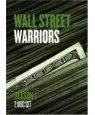
Wall Street Warriors: Season 1 DVD

This documentary/reality TV show follows the lives of ten upcoming and successful stock market players, giving you an inside look of what it’s like to control millions of dollars everyday in the stock market. The show really does an excellent job of capturing the essence of what Wall Street is all about, and what it takes to be successful. I found myself relating to many of the aspects talked about on the show, and it helped me realize I’m not the only one who sometimes goes insane in the stock market.

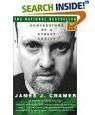
Confessions of a Street Addict by Jim Cramer

The only word to describe Jim Cramer’s tell-all biography of his life and work as a hedge fund manager would be “enthralling”. I read this book front to back in about three days and I was loving every minute of it. Jim Cramer of course is the successful former hedge fund manager now hosting the very popular “Mad Money” show on CNBC. In Cramer’s book “Confessions of a Street Addict”, no details are spared as you read all of Jim’s terrible and lucky events that took place throughout his life such as living in his car to successfully avoiding a major stock market crash. This is a book that offers no real investing information, but it is a great read because Jim Cramer has led such an interesting life and gives you an inside look at how hedge funds work.

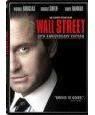
Wall Street (20th Anniversary Edition DVD)

The masterpiece movie by Oliver Stone is set in the fast paced 1980’s where a struggling stock broker named Bud Fox has aspirations to become a real player in the game. His only chance to reach that goal is to work under Gordon Gekko, a heartless but brilliant stock broker who will do anything to make a profit. Starring Michael Douglas as Gorgon Gekko and Charlie Sheen as Bud Fox, the movie has won countless awards for it’s amazing performance of the criminal acts of insider trading that were prevalent in the 1980’s stock market.

Bronze Finish Bull Statue Wall Street

This gift isn’t anything spectacular, but it is awfully cool since it is similar to the real bronze bull statue in New York. Good for anyone who’s got an empty desk and wants some Wall Street spice. You can use it as a fun paper weight or as a weapon for those angry stock market days! .

StockCast – Digital Stock Market Watcher

Stockcast is a digital stock market watching device, displaying real time information on the major stock market indexes, all without needing to log onto your computer or any financial website. This item is more of a novelty gift than a serious tool used by those in the stock market industry, but it’s a neat way of keeping up with the market, providing a sort of “at-home” stock market ticker. The Stockcast can be tweaked to follow your entire portfolio, or just the major indexes such as the DOW Jones, S&P, etc.

Rich Dad Poor Dad

Rich Dad Poor Dad
Buy now from Amazon

Rich Dad Poor Dad is not just about investing, it’s about developing a different mindset when it comes to money, and financial independence. It’s an excellent book for young investors, or anyone who you feel could use an improvement financially. The book in no way teaches you how to make large sums of money (be it the stock the market or other investing ventures), but it does open your mind to the possibility of investing for a better future. It’s a simple book, but it’s a powerful one that I highly recommend for any young financial/investor minded individual.

Introduction to Short Selling

There is saying that no matter what is going on with the stock market, you can always make money somewhere. But what if the stock market is crashing or prices are on the decline? How then can you make money? This is where the need for short selling becomes apparent. With the ability to both buy long and short sell the market, you are now capable of making money regardless of which direction the market heads towards. But what is short selling and how does it work? Let’s take a look into the less appreciated form of making money in the stock market known as short selling.

What is Short Selling?

Short selling is the method by which investors and traders profit only if the price of a stock goes down. It is the opposite of buying long, which is the process of buying stocks and profiting only when they go higher in price. It is a risky strategy with limited upside, but it does enable you to make money if stock market prices are on the decline.

How does it Work?

The process of short selling stock works by first borrowing stock that you do not own. This can be considered the “buying” (or acquiring your shares) part of short selling. When you wish to no longer keep your borrowed shares, it is known as ‘buy to cover’ as you are buying the shares to cover the shares you borrowed. When you buy to cover, you purchase the shares at their new price versus the original price you short sold them at. If the new price is lower than the original short sell price, you’ve made a profit.

Here’s an example of short selling in action:

Suppose you short sell 100 shares of XYZ stock at $10 per share. You now are borrowing 100 shares of XYZ stock. Then XYZ drops in price to $95 per share, and you want to cash out and take your profits. So you ‘buy to cover’, which means you buy XYZ stock at $95 per share, and returned the shares to the lender of the XYZ stock who you orignally borrowed from. You then profitted $5 per share.

Downside of Short Selling

The biggest issue with short selling is the maximum return on your investment is 100 percent. This is because the most a stock price can go down is 100 percent. This is a problematic restriction to short selling by comparison to buying long. This is because when you buy long a stock you can theoritically make an unlimited percentage gain on your investment since stock prices have no rising limit. That’s just stock market mathematics for you.

Further, short selling only works as a short term strategy. History tells us that the stock market is always going higher in terms of prices, so short selling the stock market definitely wouldn’t be a smart idea if you are a long term investor. If you wish to be profitable with short selling, you need to be more focused on the short term, which means being more actively involved with your portfolio.

How Much Should I Invest In The Stock Market?

How many Benjamin Franklins should be Invested?

Knowing how much you should invest in the stock market is incredibly important to figure out for your own financial sake. We’re all different in terms of our age, net worth, and risk-tolerance; A simple “invest 50% of your net assets in the stock market” recommendation is too vague for anyone to go by. So this article will show you what’s important when it comes to deciding how much money you should invest in the stock market.

Ultimately only you can decide what the right amount of money to invest in the stock market is. Nonetheless, these are the factors you need to consider when deciding how much of your money should go into stocks.

Take into Consideration:

Your Age

The younger you are the more aggressive you can be with your investments since you have more time to earn any money back that you may lose in the stock market. Retired and soon to be retired investors don’t have this luxury and have to look at investing much more cautiously than say a 25 year old. Since retired individuals usually rely on the dividends of their invested money to sustain their standard of living, they need to invest less to lower their risk.

How Aggressive You Wish To Be

In general, the more risk you take on the higher your potential gains and losses are. The more money you invest, the more risk you are essentially taking on (even if you invest in low risk stocks). So ask yourself what your goals are for the present and for the long term, and determine how aggressive you are on a 1-3 scale (1 being non-aggressive, 2 being neutral, 3 being aggressive).

How Good of An Investor You Currently Are

I’m a firm believer in the more experienced and skilled you are, the more you should invest (up to a certain point). In my case, I only invest 25% of my net assets. However as the years go on, I will consider myself worthy of taking on more risk given that I have more knowledge, skill, and experience under my belt.

Always remember:

Don’t invest money you can’t afford to Lose

The money you invest in the stock market should never, ever, ever, ever be money that you can’t afford to lose. Regardless of how much of it is invested, if you invest with money you need to sustain your standard of living you are putting too much risk and pressure on your portfolio and yourself.

Invest only as much as you are comfortable losing

While we all hope that we are successful in our investments, it is unrealistic to assume we couldn’t possibly lose every cent we put in. So when asking yourself “how much should I invest?”, remember that you need to be more comfortable with the fact that whatever amount of money you invest can possibly all be lost. Not only will this help you determine the level of risk you want to take on, but it will also keep you humble about your investments.

line break

With all of this taken into consideration, you should have a rough estimate of how much of your money should be invested. However please speak to a non-commission based financial advisor/financial planner if you still feel unsure of how much you should invest.

Common Myths About The Stock Market

As an investor who is very actively involved in the stock market, I hear a lot of unrealistic and outright wrong beliefs regarding the stock market. Sometimes it’s harmless myths being perpetuated, other times it’s dangerously wrong beliefs that lead to terrible advice being given for your portfolio. Here are some very common stock market myths:

Short Selling Stocks Is Anti-American

The Belief: Since you are short selling stocks you are hoping to make money when companies do poorly or go out of business, and thus are encouraging our economy to fail. This would be the opposite of “buying long” in hopes of the stock market going higher in prices and our economy strengthening.

The Truth: Short selling stocks is no different than buying stocks in the typical “long position”. The fact of the matter is that some companies are not bright spots in our economy, and are destined to fail regardless of whether you short sell the stock or not. In rare cases, short sellers can bring to attention scandals within companies and help bring the truth out, such as in the Enron scandal in 2001. Short selling is clearly not anti-American.

When Someone Makes Money, Someone Else Loses It

The Belief: This is the belief that the stock market is a zero-sum game. So when one investor losses money on a stock, someone else has gained that money. In essence, it is the belief that money never grows in the stock market, but is simply transferred from the ignorant to the savvy investor.

The Truth: This is a tricky stock market myth as it can be true in some situations, but in general the stock market is not a zero-sum game. What allows the stock market to go against this belief is that over the long term investors can all profit as long as the stock market is constantly going higher. So even if I lose some money on a few stocks this year and gain on some others, if I invest for the long term I will be profitable as will all other investors since prices are continously going higher over the long term. Only in the immediate short term can the stock market be considered a zero-sum game, where one investor’s loss is another investor’s gain.

Buy And Hold Is The Best Strategy

The Belief: The best way to grow your money is to find stocks you like and sit on them for as long as you can. You can’t beat the stock market, so you might as well just wait it out for many years.

The Truth: Unforunately while this used to be true many decades ago, the truth of the matter is that buy and hold is an extremely poor strategy in this day and age of the stock market. There are few companies these days that provide both genuine value and growth, and that is why buy and hold is an obsolete strategy.

You Can’t Beat The Stock Market

The Belief: Beating the stock market’s own performance is not possible, and those individuals that do actually accomplish this feat will not have their “luck” last for long. Don’t bother trying to outsmart the stock market, just accept that you aren’t going to outsmart the millions of other investors who believe the stock market isn’t beatable.

The Truth: The stock market is able to be beaten in terms of performance! Investors and traders do it every year, and some do it every year consistently. While it is not an easy to accomplish, it is at the very least possible. With that being said, most investors simply don’t have the time to actively manage their portfolios and thus do not have the ability to outperform the stock market over the long term, which is why this myth refuses to die.

Lessons from the Dot-com Bubble

DotCom BubbleIt all started during the mid 1990’s. The Stock Market soared on technology and Internet stocks, IPOs were all the rage, and the sky was the limit for stock prices. The masses believed there was a new world upon us, and the internet was to become the future of business. Then reality set in when the hype didn’t live up to it’s promises, and the stock market crashed. If you take all of this for only its face value, all you see is what happens when a stock market gets overvalued and crashes, but if you look deeper you can find plenty of timeless lessons that every investor should learn. Here’s a few lessons that can be gathered from the Dot-Com bubble:

Fundamentals Don’t Lie

The fundamentals of the Dot-com bubble were horrible, most new public companies weren’t profitable and some had no intention of ever making a profit. IPOs were going sky high while the business model itself showed no realistic way to turn a profit. These big warnings are known as red flags, and they were everywhere during the dot-com bubble. The educated investors and professionals in the stock market saw these red flags and knew that a crash was coming, and that’s why they were successful during the Dot-com bubble. The rest were left to fight to sell their rapidly devaluing stocks.

Lesson learned: If you are investing in the stock market for the long term, don’t invest when prices are overvalued and fundamentals are poor. The combination of these two problems are practically begging for an eventual stock market crash if things don’t turn around. You want to invest when you see nothing but green flags, not red.

Trading stock market momentum is fine, but always remember it’s just momentum!

The stock market rallied during the dot-com bubble for good reason: everyone and their grandma was excited about Internet based companies. The overall investor’s belief was optimistic and this fueled a multi-year rally that had seemingly endless momentum. But as we just learned, the fundamentals were garbage and when the momentum died, the party was over and the stock market crashed.

Lesson learned: If trading/short-term investing is your thing, then get your profit and get out. Don’t get caught up in how much higher your stocks can go, just sell them when you believe it’s time to get out. When the reality of overbought stocks comes into realization, you want to be the guy with all of your stock sold, not the guy caught off guard while panicking about what you should do.

Life-Altering Changes Don’t Happen Overnight

The optimism for the Dot-com bubble was supported by the belief that internet business was somehow going to instantly take off and going to retail stores would be a thing of the past. Huge issues such as customers having to pay heavy shipping fees were regarded as not important, and the stock market rallied while believing that we’d all be buying our groceries online and ordering our pizza from a .com site. The problem was that none of this was actually occurring, and it was really just wishful thinking since most companies had no realistic business model to get these society changing ideas off the ground.

Lesson learned: The internet was invented in the 1950’s; It didn’t become popular until the 1990’s. When a company or many companies are promising life-altering changes in how we live our lives, be very skeptical. Even if these ideas for change are realistic, they don’t happen overnight, in most cases they don’t happen for decades!

Stock Market Percentages and Mathematics

Imagine a stock that falls fifty percent one day and rises fifty percent the next day. Seems like you’d have broken even, right? Wrong. This is the beauty of mathematics, and it occurs in the stock market all the time. While this shouldn’t be a significant problem for your investments, it can often be misleading and confusing when researching and analyzing stocks.

Let’s use the example of a recently volatile stock known as E-Trade Financial (ETFC). The stock price experienced a large sell off and dropped to $8.59 per share, a 58.7% drop. The next day a rally occurred in the stock market and E-Trade’s stock soared up 40.9%. This left the stock at $5.00 at the end of the day. This is a key example of how the percentage mathematics used in stock prices can easily be misleading to casual investors.

Now let’s break down this problem in simpler terms. Suppose you bought XYZ stock at $10 per share. It remains around $10 per share and suddenly it falls 80% one day due to a sell off and ends the day at a meager $2 per share. The next day, the aggregate stock market sentiment is the stock was oversold, so a rally occurs and the stock soars up 50%. If you were a long term investor during all this madness, you’d still be down significantly. A 50% rally in a $2 per share stock will only result in a $3 stock price. Which means despite the face value of 80%-50%=30%, you are actually down 70% on your investment of XYZ stock because the price per share ultimately went from $10 to $3.

Investing in the stock market is confusing enough already to the amateur investor in today’s conditions; So always keep this in mind when you research and analyze stocks as this is an easy mathetmatic occurrence to forget about or overlook.

What I’ve Learned About Blogging After 2 Months

It’s times like these that I realize that the only thing I know is that I know nothing. I learned it first when I started investing in the stock market over 2 years ago, and I was reminded yet again when I decided two months ago to start my own ‘how-to’ investing website.

Now while I wouldn’t consider myself a computer and internet guru, I am far from being computer illiterate. Infact I’m typing this article from a computer that I built myself. So when I decided to start an investing website, I thought given my respectable knowledge of both computers and the internet, that I wouldn’t have too many problems; I was very wrong. Here’s what I’ve learned about having a blogging site in the past two months since I opened up the site:

Having a good domain host is essential
I started out on a certain well known website host (company name withheld) and was plagued with problems from the very start. It ultimately came down to the fact that they offered an inferior service at an overpriced cost. I experienced everything from url problems, to not being allowed to access general files in my own account, to even discovering that the majority of all of my problems came down to my inferior host. I have since switched to Bluehost for my web hosting needs, and am very happy with them.

Simplicity is more effective than overwhelming complexity
When I first started customizing the theme for this website, I wanted to add all kinds of things such as displaying recent comments, recent blog readers, current users online, my website rank, etc. Similar to the early 1990’s when web designers just vomited up code everywhere and decided to call it a website, I was going for overwhelming complexity instead of effective simplicity.

When I decided to cut down everything I felt wasn’t necessary to my site, the pages became smaller in terms of file size, and ultimately became more effective. I realized that with less options available to the reader, the more effective the available options will be. This helped my readers find things more easily, as well as increased the advertisement click through rate on my site.

You Really Will Get Out What You Put In
I’ve noticed that articles I write that provide genuine value to readers always reward me in return. If I write an article that a reader believes is really something useful, he will bookmark it on a social networking site and then others will view my article. Another example is when I submit a quality article to a blog carnival, I have a good chance of being an editor’s pick and receiving more traffic.

Now every time I write articles, I try to pause and ask myself, “Why would I be reading this? Is there anything valuable in this article”? Although this usually results in common attacks of writer’s block and less frequently posted articles, the articles that I do end up publishing display quality over quantity material.

Blogging is hard, but making money from blogging is even harder.
The idea of creating a website and having passive income is very attractive yet very misleading in terms of it’s difficulty and success rate. While there is no official statistics, the generally agreed upon average for click-through rates for advertisements on websites is around 1 in 100 views. So if you get 100 views on your site in one day, you’ll end up with one advertisement click. One click usually amounts to around fifty cents.

So if you want to actually make considerable amounts of passive income from your website, you’re going to need significant traffic to achieve that goal. Using our rough averages listed above, if you wanted to make $1000 dollars per month, you would need to bring in 200,000 views per month. In my second month with this website, The Investor’s Journal brought in a mere 1,410 views. Now that is a reality check for all you passive income wanna-be’s.

The upper-center of the page is generally the hot spot
After large amounts of research and some experimentation, I’ve concluded that the upper-center of the page is the hot spot for reader attention. If you want to make money off your website, it’s best to have ads that are placed in that section of the site. This isn’t true for all sites, but in general it is the first place a reader looks. Further proof of this argument can be seen in just about any major site with advertisements in their articles; the advertisements are always placed in the upper-center part of the page.

Competition is rampant, therefore “Content is King”.
Many people say how the key to success with a blog is to have great content. It is definitely true that good content is what will bring you readers, but there’s more too it than that. What most people never mention is how much competition there is out there. You need good content not just for the sake of keeping readers, but also because the readers have such a wide range of choices to get similar information. My niche of ‘how-to-invest blogging’ is less crowded than other niches, but there are still plenty of sites just like mine out there.

Forgot about the little things and Just Focus on Content
In the beginning, I was so concerned about the site layout, which ad formats were most effective, what color scheme I should use, etc. that I lost focus on what really mattered: writing quality investing articles. After I got back on track I started writing more frequently and with less occurrences of writer’s block. I started to realize that while site layouts and ad formats are important, they matter very little in comparison to the content that is shown on the website. It’s not the layout that has people viewing my site, it’s what I have to say in my articles.

Learn CSS or enjoy having no control over your site’s appearance
When I first created my website, I installed WordPress and had the default theme loaded. Even when I was a blogging virgin I could tell that the default wordpress theme wasn’t going to cut it. I eventually looked around for some themes I liked and applied them to my site. Then came another obstacle: I have no idea how to read, edit, or understand any of the CSS code in the theme. It took me at least a week of trial and error to get the hang of CSS and other little codes in the theme’s design.

Of course I could have just hired a professional to do all the work for me. However I strayed away from hiring someone to create a design for my website for several reasons. First, it is going to cost a decent amount of money to have someone design my site. Second, with the design being created by myself, I am more self-reliant and can easily adjust the layout to my liking without having to contact some hired designer again. Third, I am motivated to make this website successful, so I have pride in knowing I designed my site by myself and didn’t have to hire anyone.

Conclusion
Just like anything else out there, blogging is much more difficult than it originally seems. The amount of knowledge a blog author has to have in both websites and their topic of choice is what ultimately leads to most blogs being abandoned within the first year. However I am not as easily discouraged by the difficulty of blogging and its many obstacles that it throws at me, and I hope ten months from now I can write an even more in-depth article called “What I’ve Learned About Blogging After 1 Year”.